


It’s unusual for Lent and Ramadan to fall at the same time, as their dates shift from year to year. This year, however, they coincide, and I want to take the opportunity to send my best wishes to everyone observing Lent 2026 or Ramadan 2026.
Both periods are a time for reflection, prayer, fasting, and charitable giving. I hope this season brings peace to all who are observing.
News from Westminster
Over the past year, the Labour government has been taking forward practical reforms that matter to people’s daily lives, even where they haven’t always featured prominently in the headlines.
One of the most significant developments is the introduction of stronger rights for private tenants through the Renters’ Rights Act. This legislation, which received Royal Assent in October, will abolish “no-fault” evictions under Section 21 and replace them with more secure periodic tenancies, offering renters much greater stability and protection. It will also limit rent increases and improve minimum housing standards benefitting millions of people living in the private rented sector across England.
On housing ownership, the government has also taken a major step to reform the leasehold system, long criticised for being outdated and unfair. New measures will cap ground rents at £250 a year and progressively reduce them to a peppercorn after 40 years, while banning the creation of new leasehold flats and strengthening the ability of existing leaseholders to convert to commonhold. This will make homeownership fairer and more secure for millions of families who have, until now, been subject to forfeiture and arbitrary charges.
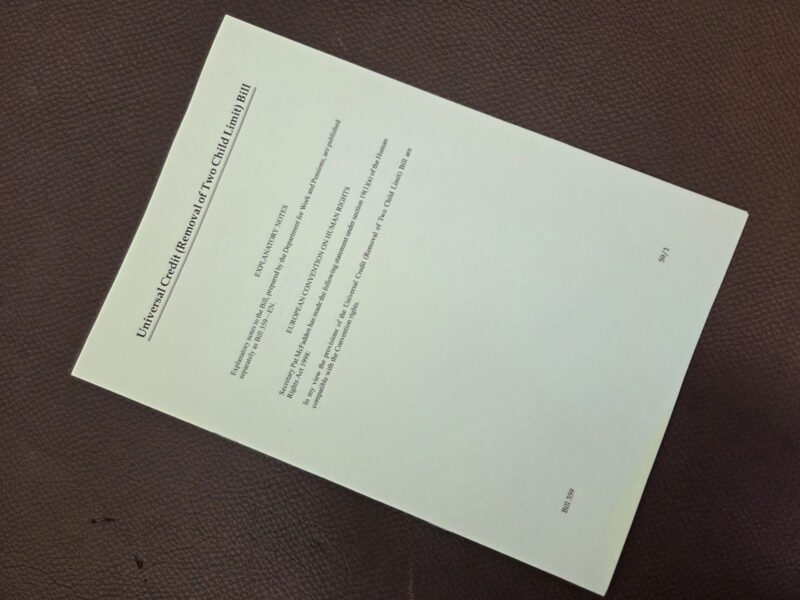
In the welfare system, a significant change was made when the government abolished the two-child benefit cap, lifting an estimated 450,000 children out of poverty. This is a real and measurable step in tackling child poverty, reversing a policy that disproportionately affected many families with more than two children.
New employment rights legislation represents one of the most significant overhauls of workplace protections in decades, with measures being phased in to improve sick pay, strengthen protections against unfair practices such as exploitative zero-hours arrangements, and enhance rights around family leave and redundancy consultation.
Further provisions, including stronger safeguards against “fire and rehire” and expanded flexible working rights, are due to follow.
These changes reflect a broader commitment to fairness in housing, security for families and practical relief from rising living costs. While there is always more to do, these are the sorts of reforms that will make a tangible difference in people’s lives.
Hammersmith bridge
Hammersmith Bridge remains one of the most important unresolved transport issues affecting west London, and an issue I am continuing to raise with government at all levels.
The Hammersmith Bridge Taskforce met last year and identified two issues that must be resolved if progress is to be made. The first is to reach agreement on the costings and method of repair. The second is to provide up-to-date traffic data showing how the closure is affecting surrounding routes, including the A316 and Chiswick Bridge. Without clarity on both, it is difficult for Government and other partners to take decisions about funding and the way forward.
Although it has taken longer than I expected, I understand that the taskforce is due to reconvene in the very near future, although a firm date has not yet been confirmed. I have been writing regularly to the Department for Transport to keep the issue at the forefront of their work, and have received assurances that preparations for a further meeting are under way. I know that MPs from across west London continue to raise the bridge regularly with Ministers, reflecting the strength of local concern.
There remain important questions about how much funding might be available and what role central government will play. At this stage there is no clear indication of the direction Ministers will take, but it is essential that all options remain on the table. Residents’ associations across the affected area have consistently made the case that the bridge should be restored to its former tolerances, allowing it to function again as a full river crossing.
Recent public demonstrations at the bridge have underlined how strongly people feel about the issue, both those in favour of its reopening to motor traffic and those in favour of keeping it as a walking and cycling bridge only. I am often contacted by constituents on both sides of the argument.
The immediate priority now is for the taskforce to meet again and take a decision on the bridge’s future. Once that happens, I hope we will have a much clearer picture of how local authorities, Transport for London and Government intend to proceed. I will continue to press for progress and to keep residents informed about the outcome of any meetings and what they mean for the future of the bridge.
I share everyone’s frustration at the length of time this has taken, but the huge cost of the project means that there is no easy solution here. From time to time new schemes are put forward to solve the problem and in every case these have either been looked at and dismissed or are clearly fanciful. There are only two realistic options for restoring the bridge, if that is what is decided, and both are very expensive. In the meantime, credit should go to Hammersmith & Fulham Council, which despite its restricted funds has spent around £50 million on extensive repaires to stabilise the bridge to make sure it’s safe and available to pedestrians and cyclists.
Justice
The Justice Committee, which I chair, remains very busy. This month the Committee held an evidence session on access to justice, and the practical barriers people face when trying to resolve disputes or obtain legal help. The evidence reinforced concerns that delays, complexity and gaps in provision are leaving many without effective access to the courts.
The Committee is currently undertaking three major inquries on access to justice, rehabilitation of those who have left prison and on youth custody.
These inquiries followed earlier reports examining rehabilitation in prison, the drugs crisis in prisons and the County Court. We continued work on examining the government’s proposals for reform of the criminal courts, including the role of juries and magistrates.
I have also been raising many of these issues in the Commons. At the beginning of the month I raised the issue of violence in the youth prison estate.
During the Prison Capacity annual statement, I highlighted that while reducing reoffending is rightly central to easing long-term pressures on the system, prison education is being cut, not strengthened, a short-sighted move that undermines rehabilitation and sows the seeds of future offending.
The Committee’s work aims not just to diagnose problems but to identify solutions that ensure justice is swift, fair and accessible. That means looking at backlogs in criminal and civil courts, the role of jury trials, sentencing practice, prison education and rehabilitation, and the experience of victims in the system.
Local housing news
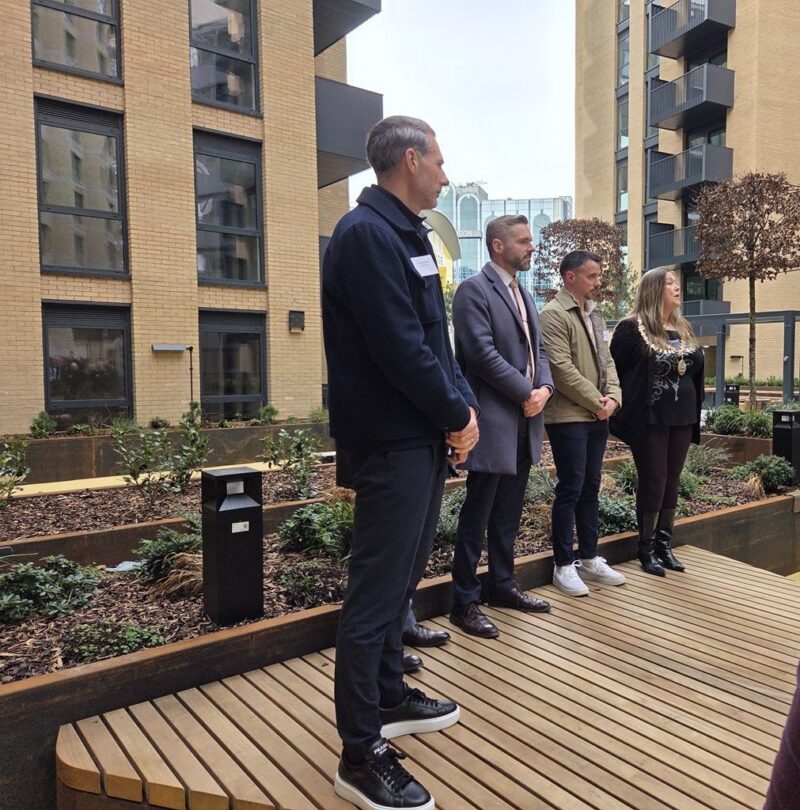
This week I spoke at the official opening of Peabody’s new homes on Chiswick Riverside, a development that underlines what can be achieved when public, private and third sector partners work together. Joined by Amy Croft, Mayor of Hounslow, Tom Copley, Deputy Mayor for Housing, and Shantanu Rajawat, Leader of London Borough of Hounslow, we marked the completion of 420 new homes, nearly half of which are designated as affordable housing.
This development is a real example of constructive partnership delivering much-needed homes for local families, key workers and residents on modest incomes and helping to meet the urgent housing needs of west London.
I regularly meet with major housing providers. In the last few weeks I met with the Chief Executives of London & Quadrant, Guinness and Notting Hill Genesis to discuss the condition of existing social housing and their plans for delivering new affordable homes locally. With additional funding available to social landlords these were constructive discussions, with encouraging updates on refurbishment programmes and future development.
The Government’s recent Comprehensive Spending Review confirmed that around 90% of required Building Safety Fund costs for housing associations will be met centrally. That means Housing Associations will not have to divert significant resources from their own budgets to cover essential safety works, freeing up funding to invest in improving existing homes and building new ones. For constituents who have been waiting too long for repairs and upgrades, this is a welcome step forward.
Out and about
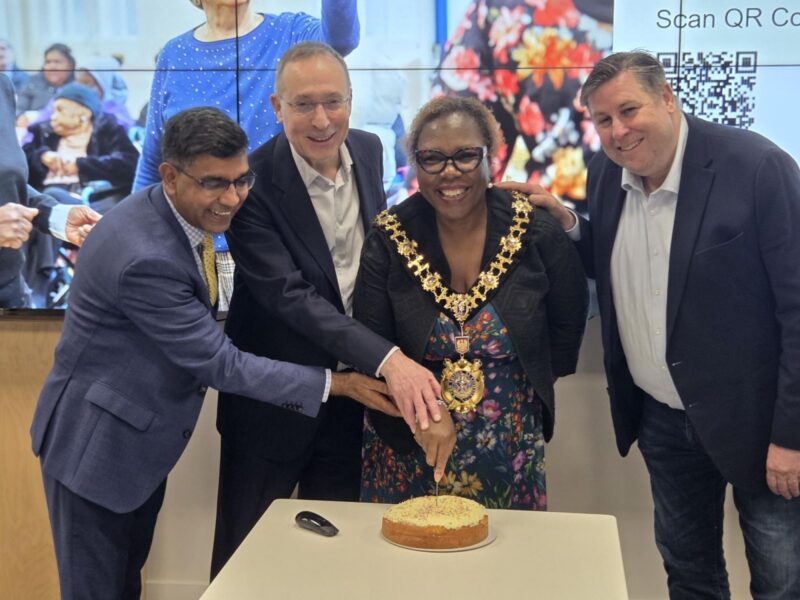
I was delighted to attend the Silver Social Valentine’s event organised by Cllr Asif Siddique as part of the Council’s Silver Social Series. It was a lovely occasion bringing together older residents from across Hammersmith & Fulham for friendship, music and good conversation. I helped the Mayor cut the Valentine’s cake, and it was clear how much these regular gatherings mean to those who attend. You can learn more about these regular events here.
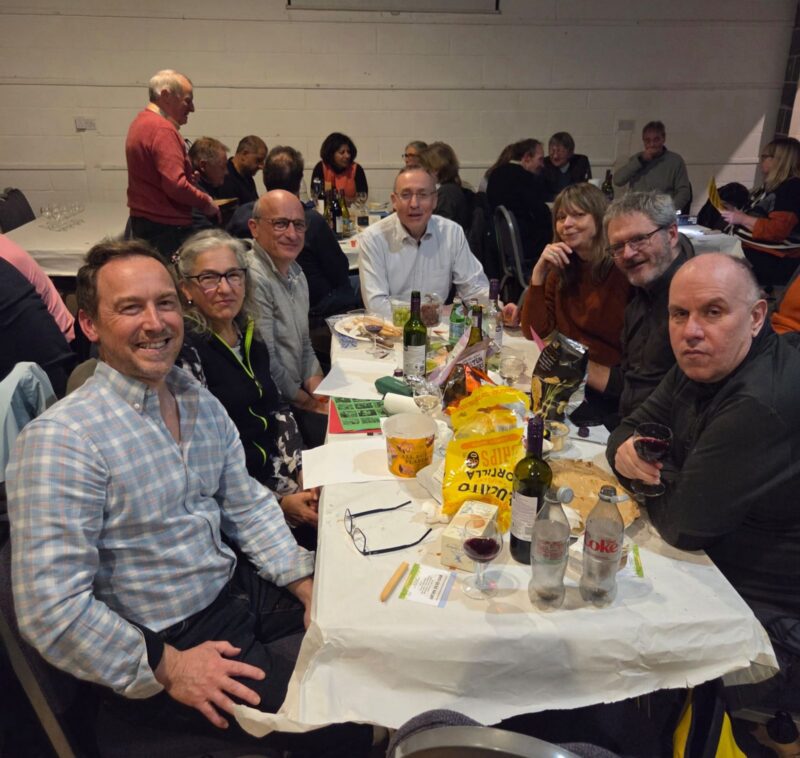
Earlier this month I joined the Chiswick Horticultural & Allotments Society quiz at St Michael’s, which proved to be a thoroughly enjoyable evening. I was part of the Abundance London team, and after some spirited competition we finished joint second out of eight teams.
This month I also attended the delayed Hammersmith Society AGM and awards evening. It was good to see local residents and Society members come together to reflect on the year and celebrate what makes Hammersmith and Shepherds Bush special. Awards were presented across a range of categories, including the much-feared Wooden Spoon for the best and worst local developments, and there was a fascinating talk from local sculptor Hywel Pratley. Hywel has recently cast the first public statue of the late Queen and spoke about his aspiration to create a statue of William Morris for the riverside, a project I hope will find strong local support.

I was pleased to attend the London GP Awards at the Commons, hosted by Chelsea & Fulham MP, Ben Coleman. It was an excellent evening, made all the better by the fact that Hammersmith and Chiswick received more awards than any other constituency. Holly Road Surgery in Chiswick won two awards: the London General Practice Safety Award and the London General Practice Non-Clinical Team Award for its outstanding contribution to patient care and team collaboration. The Hammersmith & Fulham Partnership health coaching team was also commended.
I was pleased to attend and take part in the recent Community Concert at Askew Road Methodist Church, an uplifting evening of music and spoken word. The event brought together a range of local performers, including the Askew Road Church Singing Group, the Imperial College Gospel Choir and other talented musicians from across the community. I was even asked to contribute to the event myself, declining to sing but reading some favourite poetry. It was a warm and welcoming occasion, with residents of all ages coming together for an afternoon that celebrated faith, culture and community spirit.
I attended the Hospitality Apprenticeship Showcase in Parliament during National Apprenticeship Week, marking the event’s tenth anniversary and highlighting the importance of skills and training in a sector that employs millions across the country. It was good to meet George Heptinstall, who works at the Blue Boat, and Hannah Norris-Copson from the Bell & Crown, both undertaking apprenticeships with Fuller, Smith & Turner. Hospitality remains a major employer in west London, and apprenticeships like these provide a valuable route into stable, skilled careers while supporting local businesses and the wider economy.
A welcome piece of transport news: from 31 January, the 272 bus route between Shepherd’s Bush and Chiswick (Grove Park) has increased its evening frequency. Services now run every 15 minutes rather than every 30 minutes after 8pm on weekdays, after 7.30pm on Saturdays and after 6.30pm on Sundays. This is a practical improvement that will make evening travel more reliable for residents using this important west London route.
I am dismayed that the Halifax branch in Hammersmith is due to close on 28 May, removing another face-to-face banking service from our high street. While banks point to the growth of digital services, many older residents still rely on in-person support. In contrast, Nationwide has pledged to keep its local branches, including Hammersmith, open until at least 2030, recognising the continuing importance of accessible banking. I will continue to raise concerns about financial inclusion and access to services for those who depend on them.
In memorium

It is with sadness that we mark the passing of Jesse Jackson. I had the privilege of meeting him in both London and Washington. A towering figure in US politics and an inspirational speaker, he devoted his life to equality and human rights.
His courage, vision, and commitment to justice left a lasting mark, and his message of hope and fairness will continue to inspire generations.
Councillor Dr Aysha Raza
It is with sadness also that we mark the passing of Councillor Dr Aysha Raza, a dedicated public servant and tireless champion for her community in Ealing and beyond.
Aysha was one of the most energetic and inspiring people in London politics and a compassionate advocate for equality, public services, and local residents. She was an energetic and inspiring campaigner, and her warmth, commitment and fierce loyalty were evident to all who worked with her. She brought boundless energy to her work and to the issues she cared deeply about, and she was always a lovely human being.
She will be missed by the thousands she helped, as well as by those who were fortunate to call her a warm and loyal friend. Rest in peace, Aysha.
This month I wrote an obituary of Iain Coleman, former MP of Hammersmith & Fulham, for the House of Commons magazine, which you can read here.